More than 30 former tenants of the Park Babelsberg residence hall returned to “their” residence hall in July 2025 – around 50 years after their student days. In conversation with the Studierendenwerk West:Brandenburg, they talk about eight-bed living units, legendary canteen stews, and friendships that lasted a lifetime.
A reunion with the place of their youth
Laughter in the stairwell, cautious glances down familiar corridors, the first step through a familiar front door: in July 2025, more than 30 former residents of the Park Babelsberg residence hall returned to the place where they studied and lived in the 1970s. Today, they are over 70 years old – but as they walk through “their” houses, their student days immediately come flooding back.
“The longing for a place of youth brought us here,” says Konrad, who lived and studied in the Park Babelsberg residence hall at the time. “Fifty years ago, we had a wonderful time in Park Babelsberg, in our student digs and throughout the entire area.”
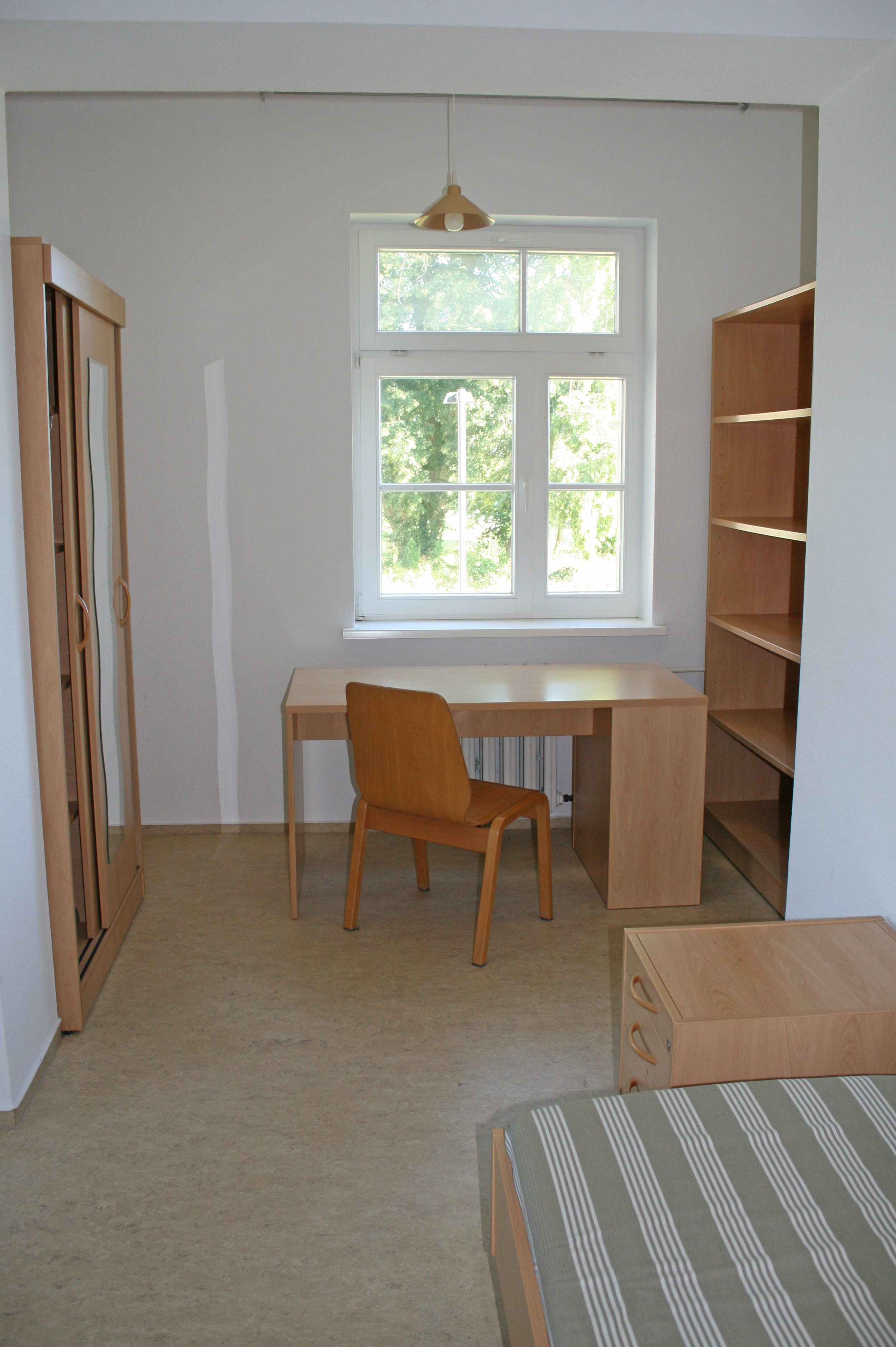
Many buildings are now long gone, including seminar buildings, the gym, and the canteen. But one thing remains: the dormitories with their distinctive pergolas - now listed as historic monuments - are still standing and continue to be inhabited by students.
Eight people, one unit – living back then
Today, many students prefer a single apartment or small shared flats. In the 1970s, living in Park Babelsberg looked very different.
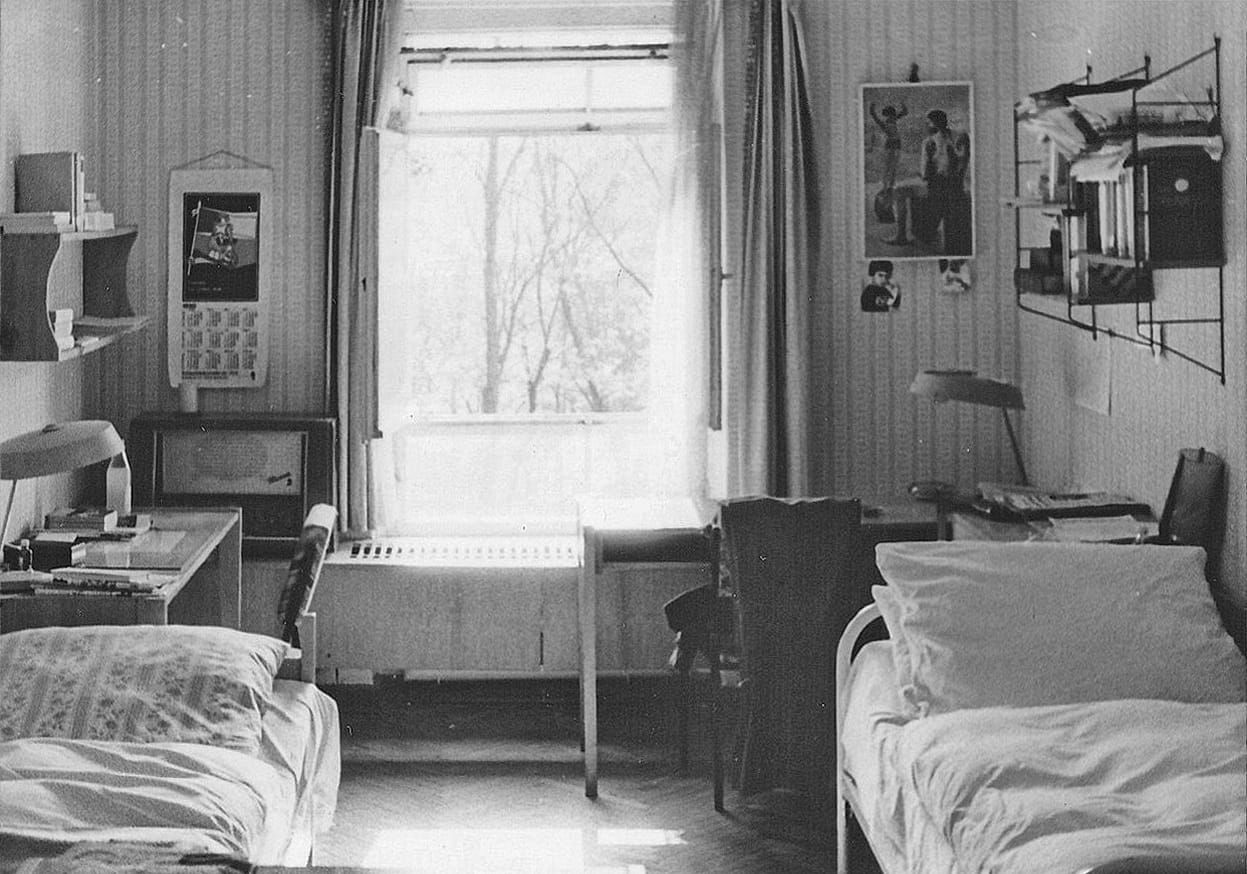
“There were eight of us living in each residential unit,” recalls Konrad. There was a large study room with desks, shelves, and cupboards, two smaller bedrooms with bunk beds, and a washroom with toilets and washbasins. Showers were taken in the large communal shower in the basement. Privacy was scarce – but the sense of community was all the greater for it.
“Our monthly rent was 10 marks. Heated. Including bed linen every three weeks.”
Not everyone settled for the standard layout. “We remodeled our room back then,” says Konrad. The linen cupboards became room dividers, the bunk beds were rearranged, and in between them were desks, shelves, a radio, a voice recorder - and later even a black-and-white TV. The living unit became a living space that was shared as a matter of course.
Student club, photo lab, and sports – the residence hall as the center of life
What all alumni have in common: the residence hall was much more than just a place to sleep near the university. Most of the community life was organized by the students themselves.
The student club was located in the basement of one of the buildings. People would meet there in the evenings for a beer or fruit wine from Werder, to dance, discuss, and organize joint activities. The photo lab was located in another basement.
Wolfram, who was active in the photo club at the time, recalls: During the annual “student days” at the beginning of May, they took photos during the day and developed them at night. The freshly developed pictures were presented as wall newspapers in the canteen before breakfast. This allowed everyone to review the previous day in pictures.
Sports were also very popular. Volleyball and handball were regularly played in the gym, and many went jogging in the park.
“The table tennis table in front of House A was often very busy. And in the park, people played soccer on the lawns, ran on the paths and sometimes just strolled around.”
Sometimes mushrooms were collected in the surrounding area and prepared together in the rooms. Konrad remembers big parties with freshly fried herring and mushrooms from the forests on the outskirts of Potsdam braised in butter.
The canteen as the heart of campus life
For the alumni, the canteen was the heart of campus life back then, both culinarily and culturally.
“Our canteen was the highlight of the program! Every morning breakfast. For 1 mark, you could eat your fill.”
Lunch was served from 11:30 a.m. Stew was often on the menu, “which was brilliant,” according to Konrad. He also has fond memories of the rutabaga soup and spirelli with noodle goulash. Both cost 55 cents per serving. “Especially since the lovely kitchen staff were happy to give you a free second helping.”
The hot dinner was also affordable, and leftover lunch menus were offered at a reduced price. The canteen also had a kiosk where “Edeltraud made coffee or offered tea, cookies, cake, sausages, and meatballs,” as Konrad recounts. “And you could get a beer there, too.”
The large hall served as a stage for cultural events: disco, concerts, performances by artists. “It was a real party,” says Konrad.
Today, the canteens of the Studierendenwerk West:Brandenburg provide food for students at a total of seven locations. Even though the menus, prices, and buildings have changed, the mission remains the same: to provide affordable, healthy meals and create places for people to meet.
What has remained the same – and what has changed
On a tour of the residence hall in Babelsberg Park, the alumni recognize many things – and at the same time see how much studying and living have changed. Some buildings have disappeared, and the housing options have changed.
However, one thing has remained the same: for many students, the residence hall is more than just a roof over their heads. It is a place where friendships are formed, where people learn, celebrate, and discuss together, and to which they like to return decades later.
“Carpe Diem” – a message to today's students
As they say goodbye, the alumni have a clear message for today's students:
“Carpe Diem! Seize the day! This time will never come back, so come up with something that will always remain in your memory as special, as wonderful. Make and cherish friendships. Be good to each other.”
And they already have a plan: in five years, they want to come back to celebrate the 50th anniversary of their graduation together in Babelsberg Park.