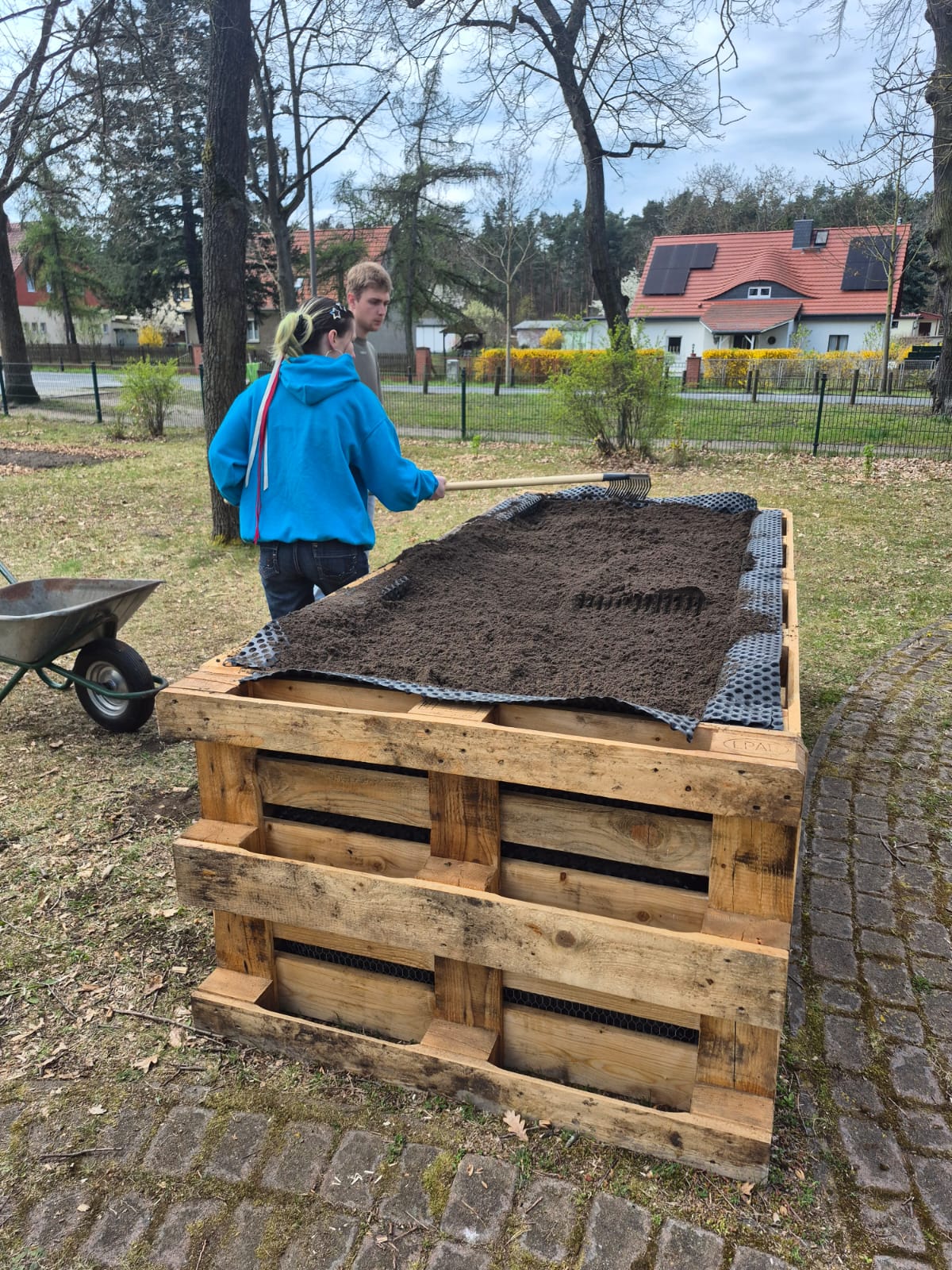
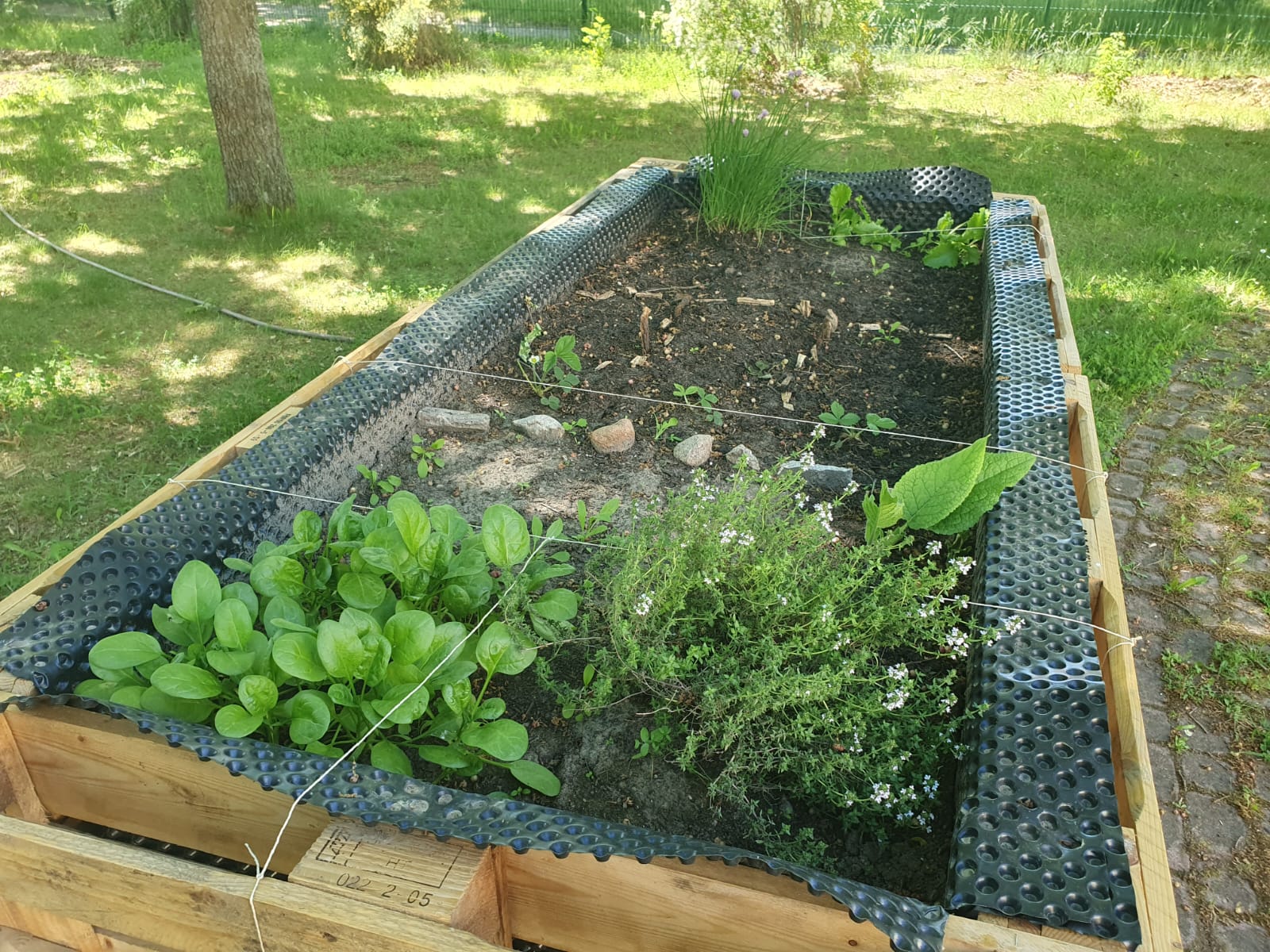
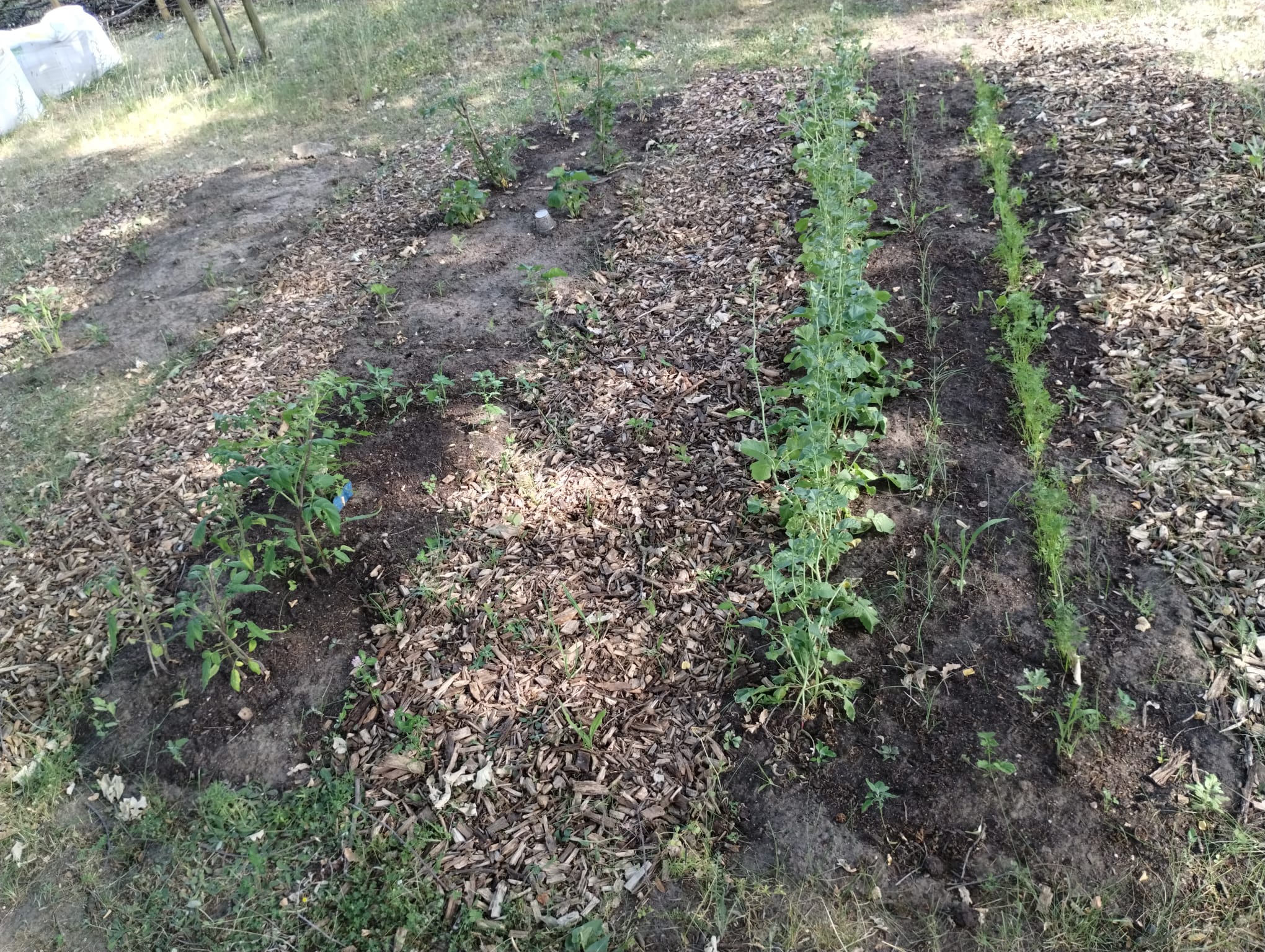
Where there was nothing but a simple lawn until recently, something new has been taking root since spring 2026: a community garden. Located right next to the student residence at Forststraße 41/43, it is becoming a small green oasis where people can garden, learn, exchange ideas or simply take a moment to relax.
The community garden was created through a collaborative effort involving the HEBEDI research group at Heidelberg University, which studies how biodiverse community gardens can promote both biodiversity and human health, together with the student residents of the Forststraße and the janitor, who enthusiastically lent a hand. As the gardening season has only just begun, the project itself is still very much in the process of growing.
A garden inspired by permaculture
Rather than planting at random, the project follows the principles of permaculture, an approach that works with natural cycles instead of disrupting them. One visible example is the deadwood hedge made from deadwood and garden cuttings that provides valuable habitat for insects and birds. The project also deliberately uses open-pollinated seeds, allowing plants to reproduce naturally. This enables the garden to become increasingly self-sustaining over time, reducing the need to purchase new seeds each season. The concept is further supported by composting systems that keep nutrients within the garden and return them to the natural cycle.
More than just fruit and vegetables
The community garden is intended to offer a welcome contrast to the often fast-paced routine of university life and the many hours spent in front of a screen. Gardening naturally reconnects people with nature. From just a handful of seeds, herbs, vegetables, and fruit gradually begin to grow and with them comes the rewarding feeling of creating something meaningful.
Just as important as gardening itself is the sense of community it fosters. The garden serves as an extended outdoor living room for the student residence a place where people can come together, whether they have a green thumb or not. Regular gardening sessions and community workdays provide opportunities for residents to get to know one another while working side by side. At the same time, the garden is open to everyone living in the residence hall who simply wants to study, relax, or spend time outdoors. This openness is what makes the garden special. No one has to garden in order to feel welcome.
Supported by many hands
The community garden is financially supported by Anstiftung, ProPotsdam, and the AStA of the University of Applied Sciences Potsdam (FHP). The project is coordinated by Facetten der Kulturarbeit e.V., which oversees the initiative and supports its ongoing development at Forststraße. Residents of the residence halls in Forststraße who would like to get involved, whether by gardening, contributing design ideas, or sharing creative suggestions, are warmly invited to join the project's WhatsApp group.